






As the uneasy ceasefire holds in West Asia, something else is happening in India’s immediate neighbourhood. Nearly six years after a dangerous conflict that led to casualties (the first in almost four decades) on the Line of Actual Control separating India and China, there now appears to be appetite for warmer ties between Beijing and New Delhi.
In March, India relaxed trade restrictions it had put in place in the aftermath of the 2020 Galwan conflict, easing the way for Chinese investment (two years after the chief economic adviser suggested it).
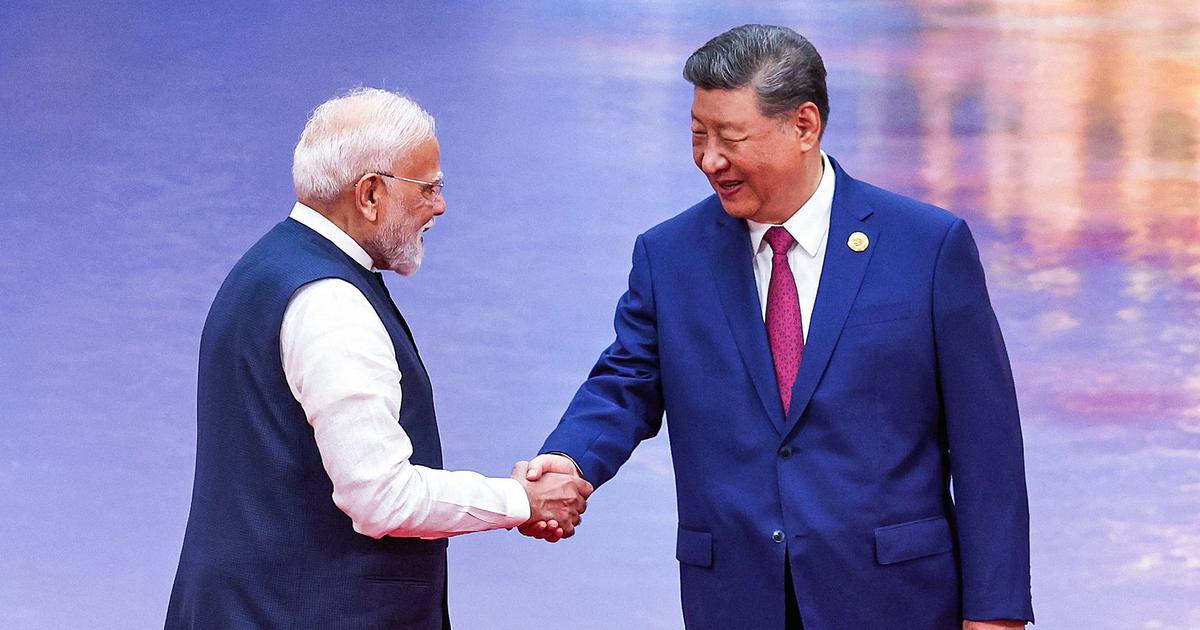
Preparations are being made for border trade to begin at Lipulekh Pass after six years. Following the critical military agreement on border patrolling in October 2024, there has been progress on visas, direct flights, the acquisition of critical equipment from China, as well as official engagement including a much touted visit by Prime Minister Narendra Modi to Tianjin for the Shanghai Cooperation Organization summit.
Relations are on an “upward trend”, said India’s National Security Advisor Ajit Doval last year. India and China are on the “right track of improvement”, Chinese Foreign Minister Wang Yi said in March. Just don’t call it a reset. Or if you do, the term needs a qualifier, says Jabin Jacob.
“I’m tempted to call it a ‘timepass reset’… It’s a bit harsh, but I am also being harsh because of all the missed opportunities,” said Jacob, an associate professor at Shiv Nadar University where he is also director of the Centre of Excellence for Himalayan Studies. “Given our capacity problems, I could be less harsh and call it a ‘marking time reset’, until the next conflict or problem. And the conflict and the problems are inevitable, because they are structural in the relationship between India and China.”
I first did a long interview with Jacob in 2020 (see: ‘Chinese are simply talking to keep India distracted’: Jabin Jacob on New Delhi’s Beijing challenge) and wanted to go back to speak to him about why he calls this a “marking-time reset”, as well as what is actually happening on the India-China front as all attention has been focused on the Gulf as well as New Delhi’s Trump difficulties. Jacob was also recently guest editor for a special issue of India’s World magazine, focusing on “India’s China Challenge” – which assembles a range of scholarly voices on a wide variety of voices, something that wouldn’t necessarily have been possible a few years ago.
“The issue showcases work by scholars young enough to have started their research work on China only in the post-Galwan period. Pavan Raghavendra who wrote the piece on Chinese influence in cricket graduated from his BA programme in International Relations in 2021, a year after Galwan, and subsequently went on to do his masters in China Studies in the US. We can see the effect of Galwan already,” Jacob told me. “We have in the last few years, compressed time frames in order to pay attention to and get as many creative inputs as possible on China to figure out what’s going on.”
Over a call and email, I spoke to Jacob about how all the “gives” are coming from India, why he thinks there will inevitably be another crisis in India-China relations down the line and how science-fiction fits into his teaching of international affairs. (All added emphasis is mine).
The big question, off the bat: Do you think there’s a reset or a rethink happening in India-China relations? If not reset or rethink, how would you characterise the state of ties?
I’m tempted to call it a “timepass reset”. That’s an expression most Indians will understand. It’s a bit harsh, but I am also being harsh because of all the missed opportunities. But given our capacity problems, I could be less harsh and call it a “marking time reset”, until the next conflict or problem. And the conflict and the problems are inevitable, because they are structural in the relationship between India and China.
Currently, the “gives” are only coming from India. The Chinese have pretty much stuck to their guns, as we saw in the eventual conclusion of whatever agreement was achieved on the LAC. It is not a return to status quo ante 2020 by any stretch of the imagination.
It is simply what has been called disengagement, and even that is not entirely complete, given the creation of “buffer zones” which has limited patrolling by troops in certain areas. While these zones have been termed as being temporary in nature, the fear, as has been expressed by several observers, is that these buffer zones could become a long term or a permanent position. That’s the current state of affairs on the LAC.
You mentioned missed opportunities. Can I ask what you meant by that? Do you feel there were opportunities to do something differently? And if so, was it to do the same things they were doing now, just earlier, or you mean taking a different approach?
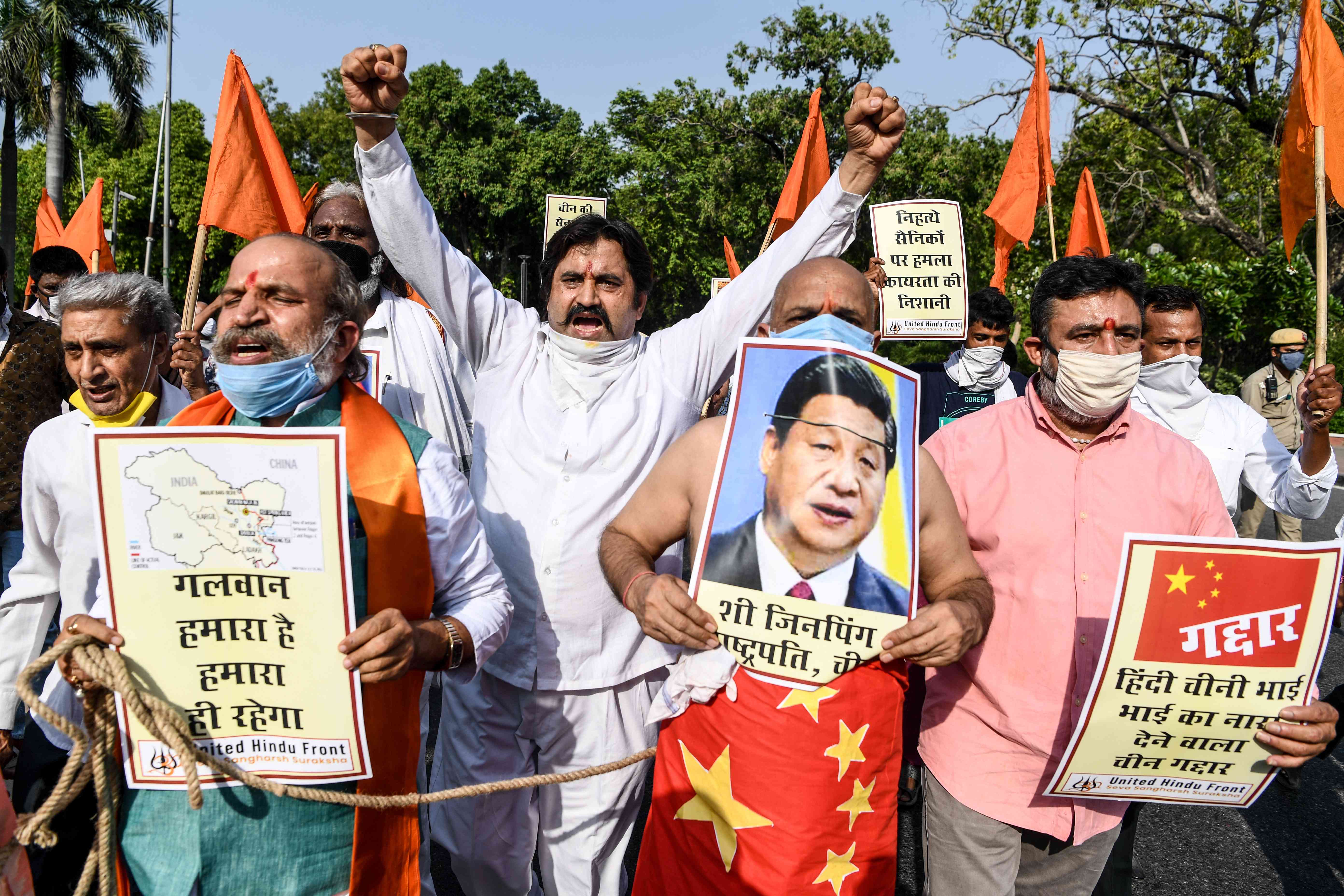
It’s a bit of everything. We’ve talked about this before. The first missed opportunity was to act in kind in order to let China know that its actions would have consequences. We should have acted promptly in a like-for-like manner when the Chinese transgressions began in 2020, for example, or at least after the Galwan clashes. Instead, India was slow. India decided to figure out what was going on, to calibrate, recalibrate, and by the time the first military response came, it was August. And even then India did not stick with the military response. All sorts of reasons have been given by military leaders, analysts, etc, about why India needed to pull back, needed to get the Chinese to the negotiating table. But none of them hold any water.
The fact that India needed to do an action in August, several months after June 15, already suggests an understanding that the Chinese were not going to move until there was a military response.
And yet, there were no more military responses and India decided to turn its soldiers into diplomats. India soon abandoned the position that they took on the Kailash range in August of 2020, as soon as the disengagement talks started the following year. I thought it showed a lack of stomach to stick it out. What is more, after the first breakthrough in disengagement talks, and when the Chinese realised that this was the extent of the military response from India, they slowed down the disengagement talks over the next few years with the result that restoration of status quo ante was pushed to the future.
The history record everywhere has shown that when you push back, when even a small country pushes back against the Chinese, they do take a step back. The one thing India has not been able to do is push them. You could say, yes, we have done a lot more than other countries might have done. But India is India, and other countries are watching. What is the example that India’s response to China has given? Take the case of what’s happening in West Asia. You quoted Mihir Sharma saying “India has friends everywhere and but leverage nowhere”.
That perfectly describes the situation. India being unable to respond adequately or in a suitable manner, sends signals not just to China, but also to the outside world. People realise that India can talk a great game, but when it comes to action, it either limits itself or its options are limited.
I would say a lot of the difficult diplomatic situation India finds itself today in – in West Asia or vis-à-vis the Trump administration – has to do with a lack of faith in India’s ability to back words with action – and that these go back to the failures of India’s response to China post-the 2020 transgressions.
Do you think it’s a question of political will or military capability? I can throw in the question of how decisions were made at the time – given the controversy around theunpublished manuscript…
Political will obviously. We are a democracy after all. Everybody is supposed to take orders from the political leadership. So if the political leadership decides to backtrack or hold off, the message goes down the line. In the case of General Naravane’s point about him being handed a hot potato, I think that’s overdrawn. If the Prime Minister is saying, “Jo uchit samjho, voh karo”, he is telling you exactly what needs to be done. In that particular matter, blaming the politician is a bit unfair. In India, we have a tendency to blame politicians for everything, and a lot of the time it is unfair. Citizens also have a responsibility.
Now, having said that, why did General Naravane make that decision? In India, I’ve seen generals talk a lot like diplomats and politicians. The problem is structural. When you have for years seen constraints, lack of resources, when you have had to deal with a civilian bureaucracy which does not really take on board military or national security interests at times, when someone with 20 years of experience in the military has to report to somebody with far less experience in the civilian bureaucracy, in the name of civilian supremacy, then you condition the military to think a certain way.
I’m not surprised the general would think of the larger picture. That he would think, if I start a firefight, will the politicians and bureaucrats come to my aid? Where are they going to get their resources from?
Anit Mukherjee has written a book, The Absent Dialogue, covering civil-military relations, and basically saying that it is dysfunctional. Frankly those of us who do China studies, we’ve also been seeing this for a very, very long time. If you’re dealing with China and Pakistan, you do get a sort of a wider remit or room to maneuver, but at the same time there are limitations because the stakes are so high. How is a general supposed to commit when he is absolutely not sure that there will not be a blame game?
Galwan also came at a time when civil-military relations were in flux. You had a new CDS. The chiefs were not exactly sure what the balance of relations was. And we are still figuring things out. Ultimately, though, the buck stops with the political class. This is again something we discussed when we last spoke at the end of June 2020.
As long as the government doesn’t engage the Opposition in these matters, and there is no Parliamentary debate, Parliament doesn’t do – or isn’t allowed to do its job – I think we are headed for trouble. You have a lack of options and a lack of creativity. And other missteps follow. Our adversaries are looking at us, and seeing how we constrain ourselves. How India fights with one hand tied behind its back. They will make the most of it.
Rahul Gandhi, Leader of Opposition raises ‘Four Stars of Destiny’, an autobiography by former Army General MM Naravane.
— Arvind Gunasekar (@arvindgunasekar) February 4, 2026
Earlier Rahul Gandhi was prevented from speaking on the excerpts from the book in Lok Sabha. pic.twitter.com/m8QPFzu9Mg
To unpack that for the reader, the suggestion is that if the Opposition is taken into confidence or included, decisions will be made more confidently because there’s less chance it’ll just be pounced on?
Absolutely. When the Opposition is taken into confidence, then the government can confidently act and nobody will blame only the government for outcomes. Similarly, the civilians, the military officials, they also have the confidence that India’s actions are backed by rational thought, and that this is what the nation wants. Not political motives, but a national consideration. People in government who are sworn to protect and defend the Constitution need that kind of confidence.
World history is replete with instances where orders have been disobeyed or ignored if it doesn’t come backed by the entire political class, backed by consensus, or even if there is an iota of doubt that decisions are being made due to extraneous considerations rather than national interest considerations.
It’s an important point, though an open question about whether you can build confidence on just one front – say India-China ties or military strategy – while there is deep distrust on so many other things. But let’s go back to the term “timepass reset” or “marking-time reset”. What did you mean by that? Was it just the need to do something right now? What are the elements of this reset, however you see it?
When I say “marking time”, a few things are happening – on the military front, on the economic front, and on the international relations front.
On the LAC, we have done the first step. We somehow swung an agreement – it’s not a satisfactory one, it doesn’t answer all questions. But for now we have created the impression of having resolved that issue. Since we failed to provide an adequate military response, maybe because of economic considerations, this is the next-best option.
On the economic side of things, Press Note 3 essentially failed to do its job. In the sense that neither Indian industry nor the government managed to do the work that was necessary in order to keep Press Note 3 effective. You can argue that five years is too short a time, or that it’s not just about what is happening in India, but also the rest of the world – Trump tariffs, the Iran conflict etc. But we have a structural dependency on China, which we needed to address – this, however, can only be done over the long term. Again, given the circumstances there was no other choice but to dilute Press Note 3.
However, Press Note 3 also did its job, in the sense that it has alerted the Indian system to issues related to China.
At least within the government, I see a lot more alertness to the problems of dependency on China. It’s a different matter in the case of Indian industry. Indian industry continues to remain bereft of any grand narrative on China, beyond simply immediate terms.
This is not true entirely of big industries, because they have a lot to do with the government, and the government has pushed them in certain directions. But, by and large the Indian economy is too heavily dependent on China, and we cannot move forward on some of our strategic plans without depending on China. So diluting Press Note 3 was inevitable. It is a different question if the Chinese will play ball now that India has revealed its hand.
Connecting all of this together is the international element. I went over our conversation in 2020, and much of it remains true. Charisma and soft power are not substitutes for hard power. While India has made a lot of noise, India is visible increasingly in international forums, there is no grand idea associated with India. There is no grand movement that India drives.
This matters, because the US has its own set of actions. The Chinese are coming up with alternative narratives and approaches – the four global initiatives, for example. If you are Kenya or Peru or Algeria, they might ask, why should I pay attention to India? What is it that India is doing that fires me to pay attention to them? What is India’s weight in the world? India is now in the slipstream, rather than trying to guide or motivate events. Until we realise that our current approaches are inadequate, we will be marking time.
Finally, a point on capacity. Unless we have capacity on China, on foreign policy, on distant parts of the world, we’re just not going to be able to do it. India has maybe 10 universities that have international relations courses. China has a university in every city, and every university has a department of international relations. Every city has Chinese students studying foreign languages. Unless we in India produce the systems, build those capacities, we will only be marking time.
While the United States has been busy burning bridges, China has been building them.
— Jostein Hauge (@haugejostein) April 3, 2025
52 out of 54 countries in Africa now trade more with China than the United States. pic.twitter.com/p4GLnAVJs5
I take it you don’t see digital infrastructure and AI and voice of the Global South as India’s visions for the world?
When the Chinese talk about a Global Development Initiative, when they talk about BRI and infrastructure development, they are translating what are interests for ordinary Chinese and trying to take those abroad. And when they do that, they are also making sure that the standards are something China can live with or even try to set. My issue with India’s current focus on AI is that it is limited to the educated classes. We are still talking about the elite 5% who are going to use AI models. It’s the remaining 95% we have to worry about. By contrast, the Chinese model has been about ensuring its approaches apply to the majority, that 95%.
Take UPI. My colleague Anand P Krishnan has just written a piece about UPI banding together with Alipay for global connections. Now, India has spoken about exporting UPI, but only seven countries have accepted it so far. And even in Sri Lanka, one of the first to accept, you can hardly use UPI anywhere. Ordinary folk would love to use UPI when traveling abroad. Instead, I have to download Alipay – because it is everywhere, including in Sri Lanka. There is that mismatch.
I’m not saying that the government’s international efforts at standard setting, wanting to be in the room, are not important. But they need to speak to a larger audience than they have until now.
India’s UPI is breaking records. With a staggering 81 lakh crore rupees in transactions from April-July, UPI is now processing 3,729.1 transactions per second, outpacing global giants like Alipay, PayPal, and PIX.
— DD News (@DDNewslive) September 3, 2024
#DigitalIndia #DigitalPayments #UPI pic.twitter.com/Rn44uk1Kv3
We have talked about limited capacity in government, and you’ve spoken elsewhere about India focusing too much on Pakistan. I have this pet peeve of many in government preferring to deal with the West. Now with Trump becoming somewhat adversarial, do you see the focus on China as India’s biggest strategic challenge, become diffuse?
No, the government is very alert on China. Galwan changed everything. But it still remains reluctant to take this public. Unless we take the interest and concern about China public, we are not going to have creativity, ideas, etc on how to deal with China. Whatever the government does, it does sotto voce. Press Note 3 has been diluted, and they want people to forget about it. The disengagement has happened, and they want people to forget about it. The LAC is no longer in the news. These are old government habits dying hard. The government prefers to keep things uncomplicated, to not be challenged on policy matters. This is normal behaviour for any government.
But there are consequences to this, especially at this moment. If ordinary Indians do not understand that China is a challenge, that we need to study international relations, that we need to study foreign languages, that we need to pay more attention to global relationships, then we are not going to be able to take advantage of situations, to spot opportunities, to deal with crises, today or in the future.
On China, there has been tremendous movement within the military, within the government. There’s a huge amount of interest, specialised studies, a great deal of work being done. Just like the differences between the government and the Opposition, there’s a problem in translating that work into effective policy, because a lot of it is being done behind closed doors, without drawing public input. Here, I’m not talking of think tankers and analysts. I mean inputs from ordinary people.
China has a massive internet culture of discussion on international relations. They have massive groups of military enthusiasts, who’re studying what China is doing or not doing in Iran, discussing Chinese weapons, failures in X,Y,Z scenario. Maybe the government will shut it down at some point, but it is also drawing from these discussions.
India may be obsessed with Pakistan, but is there a culture of ordinary citizens or professionals beyond the policy spaces, openly dissecting say, Pakistani military doctrine, its drone technology or in general, has in-depth nice knowledge of Pakistani society beyond stereotypes? That sort of thing exists in Europe, America, and China.
I don’t know how plugged in to Ajit Doval fanboy groups you are…. But let’s keep that aside. I would argue that it’s not just that the government is being silent about China. It’s that they’re occasionally signaling in the other direction. Take the noise over the “Tianjin Summit” last year, with Modi, Xi Jinping and Putin… the messaging seems to suggest we can relax on this front. That we can be friends with Beijing again.
One of the reasons why I advocated for a like-to-like reaction to Galwan, not just in the military but all other fields, is because it conveys a signal that China is a serious challenge, a serious competitor. When you don’t do that, there are consequences.
When you have to create the impression that we are or can be friends, like in Tianjin, that’s a consequence of not having done the needful in the first place. You have constrained yourself, and left yourself with no choices when somebody like Trump comes along.
You are then scrambling to respond, and trying to signal to the Americans, but the public in India is also watching these signals and are confused about what exactly India’s China policy is.
Elsewhere I’ve said that it’s time we have a National Security Strategy document, and it’s time that we clearly identified adversaries and for rational and not emotional reasons, to do so through government policy documents rather than through dog whistles and WhatsApp forwards. We need to be able to put this on paper, and get all the best minds in India coming together to think about this. And it starts with Parliament. Discussions by the Standing Committees on Defence, Foreign Policy, and Home Affairs among others, in Parliament. Only then will ordinary Indians pay attention.
To devil’s advocate that a bit, some could say that, by not turning the public entirely against China, the government gave itself space to change tack in response to Trump last year… as a way of hedging the West. The question then is… is there actually room to move towards China?
The government is really relying on a short public memory. The relationship with the US is the most important foreign policy relationship India has. And the challenge from China is India’s most important challenge.
The Indian public has over time become much more aware of foreign policy, and in that sense, it was a great embarrassment for the government that Trump imposed tariffs on India seemingly without a second thought. So, the government wants the public to forget the big Trump rallies, and is walking back from a position that it had taken.
But the policy on China hasn’t essentially changed. These are temporary movements, with the hope that the Americans will come to their senses eventually. The problem is that short-term considerations end up confusing the general public, and slowing down our eventual responses, our capacity building to deal with these challenges.
The concern is to constantly keep the public on your side, to play up that we are the victors. These short-term considerations of image building rather than long-term ones of capacity building are really the heart of the issue here.
Let’s flip the perspective then. You have often spoken of how China rarely concedes any Indian agency in its foreign policy, and prefers to just see India as working in concert with the US. Given how Trump imposed tariffs on India, has that changed? Are there voices calling to get closer to India?
On the one hand, Chinese like Indians having some agency. It makes their job easier, because India can be relied on to stand up to the Americans on occasion. On the other hand, if India has too much agency, they might use it to align with the Americans and target the Chinese. China is under no illusion that New Delhi thinks positively about it. Whatever forward movement we’ve had in the relationship is tactical and temporary, as far as Beijing is concerned. They know that Indians are partners with the Americans, and for the Chinese, anybody who is with the Americans is against China.
So last year the Chinese imposed export controls on India. They tried to block the flow of expertise into India. They never really met any of their promises about investments. Now, partly this has to do with issues of administration and clearances within India, but there also Chinese scholars who have asked, “why should we support India’s growth to become a rival against China”?
This is a dilemma that even the Chinese face. At some point they will need India to side with them to build up a coalition against the West. They know that without India, there is not going to be an alternative global order. Neither the US nor China can afford India to be an independent player. So both sides have problems with Indian agency, but they also want to make good with India.
This is well explained in an essay on Chinese political cartoons by a young PhD scholar, Cherry Hitkari, in an India’s World special issue on China. You see how the tone and tenor of Chinese cartoons on India in their state media change depending on the global context. This is par for the course as far as the Chinese are concerned. You could say we are also doing the same thing, except without a larger narrative.
On the recognition of India as a potential “swing state”, is there a constituency in China pushing for engagement? You said earlier that the ‘gives’ in the current moment are entirely India’s…
Common sense would dictate that the Chinese need to engage with India. This is true of any country – the fact that Eldridge Colby American under secretary of defense for policy just visited in India is, I’m sure also a case of the US attempting to repair bridges with India. In any big complex system, there will always be for and against voices.
I don’t think the Chinese are completely in a position of dominance over India where they can ride rough-shod over Indian interests. The current moment in fact is one in which the Chinese don’t want attention drawn to their role in Iran, which is strategic partner. So they would rather make the issue more diffuse and try to bring the Russians on board, the Brazilians on board… to say it’s not about what China does or does not do but about what the rest of the world can do.
That’s where India is useful for the Chinese. They will want to make sure that Americans don’t turn their attention to China, they will make use of this opportunity to build purchase with the Indians, to increase Indian interdependence on the Chinese economy. But, by no stretch of the imagination, does this mean that the Chinese are going to cede space in South Asia to the Indians. What the Chinese have taken, what they have achieved, they will hang on to. They might progress a little slower or less intrusively than they did before, but they will progress nevertheless.
The overall framework in which India is placed, is of a power limited to South Asia, so that China is free to achieve its interests and seen as the only peer power to the US. It’s easier to deal with a two-body problem than a three-body problem.
You’ve been clear that there are structural elements at play. You don’t have a crystal ball, but, in the next few years, do you think it’s likely that we will have another issue on the border, or another incident?
It’s hard to make predictions, but given the structural problems, China-India competition is not going anywhere. Xi Jinping says the world is going through changes unseen in a century, that the world is in flux.
From the Chinese perspective, this is not a time to down your shutters but a time to look for opportunities, see what can be done. Like how the Chinese took advantage of Covid in 2020. Structurally, it is inevitable that another incident on the border will happen sooner rather than later. The current agreements on the border are not designed to last. They’re designed to hold your position. They are susceptible to larger considerations or events beyond what is happening at the LAC. And why just the LAC? An incident at sea is not very far off either. People pay too much attention to the land border. But it’s in the maritime domain that a lot of important changes are happening.
The fact that the Strait of Hormuz can be blocked, has implications for how the Chinese will think of the Malacca Strait – they will want to increase presence in the Indian Ocean, and India will have to find ways to respond.
At the same time, I think we’ve reached a place in which countries are smart enough to not let conflicts get out of hand. Just the way India responded to China in 2020. Things will happen, but we might still have discussions, and maybe a compromise. Perhaps not one that is acceptable in the larger scheme of things, but a compromise regardless. It will be a function of power, of how big the gap between India and China gets. If it gets too big, India will compromise more easily. If it remains steady, we will have a steady state. If it starts closing, the Chinese might think they need to block or stop India somehow, as they have done on the LAC over the past couple of decades or so as Indian infrastructure got better.
Tell us about the CSEP report on China engaging with South Asia, and the India’s World issue that you edited.
The CSEP project was an attempt to bring in South Asian neighbours, who have important and interesting things to say about China. Many countries had already developed a certain degree of complexity of thinking about China in South Asia, because China has been engaged for such a long time in the region. Contrary to popular perception in India, we saw that China was not getting the free hand that the West or the Americans had in many parts of the world. Even small countries had agency to respond and react and think about what China is doing.
There’s also a capacity building question here. If India and Indian institutions do not support our neighbours in building capacity, who’s going to do it? It is a multi-year project, and we had authors from Pakistan to Myanmar, telling us what China has done but also what it failed to do. Despite South Asia being in China’s immediate neighbourhood and the density of China’s interaction with South Asia being much greater than in most other parts of the world, with the exception of Southeast Asia, studies of China in South Asia had been limited. The two CSEP reports, which I co-edited with Constantino Xavier, are a pioneering effort in understanding what is going on in South Asia in the voices of scholars from the region themselves.
With the India’s World special issue on China which I guest-edited, we brought the focus back to India. In our conversation in 2020, we talked about building capacity on China. One achievement since then, is that so many people have now started paying attention to China. In 6 years time, we have had a massive rise in the quality of analysis, and I think that is reflected in this issue.
We had Indian scholars from not just New Delhi but from across the country as well as abroad who covered a whole gamut of issues. In fact, the issue showcases work by scholars young enough to have started their research work on China only in the post-Galwan period. Pavan Raghavendra who wrote the piece on Chinese influence in cricket graduated from his BA programme in International Relations in 2021, a year after Galwan, and subsequently went on to do his masters in China Studies in the US. We can see the effect of Galwan already.
The issue is multigenerational. We have teachers and students writing in the same issue. This would not have happened so much in the past, but we have in the last few years, compressed time frames in order to pay attention to and get as many creative inputs as possible on China to figure out what’s going on. And this complexity of inputs is essentially what the special issue is on.
We did look at traditional issues. For example, we looked at how Indian military thinkers get China wrong – a very simple but profound essay by Captain TSV Ramana. We managed to combine years of experience and a range of topics, in trying to showcase what needs to be studied, what needs to be done, what are the different kinds of inputs that need to go into framing policy on China.
Some of the fundamental issues are clear, such as our analysis of China and the capacity of our universities. Dr Arvind Yelery and Prof G Venkat Raman both studied in JNU as well as in China – the latter has a PhD from Peking University – and both worked in China before returning to work and teach in India. There can be no better people today in the country who really know how educational and research institutions and businesses work in the two countries. So, when they say something, you have to listen carefully and take them seriously.
Those are several things we tried to do in the special issue, and it came out a lot better than I imagined. For me, especially, it was clear that we need to be able to write in a form and language that is accessible to the public, including policymakers. These articles address complex issues without dumbing down but are still intelligible to the lay reader. It’s a service that we as academics are duty bound to do in a country like India.
Since it comes up in this issue, tell me about sci-fi… you teach a course on it.
I’ve always been interested in sci-fi, from when I was a kid. For the course, I have to thank the Department of International Relations and Governance Studies, where I teach. It is a young department but offers a great deal of flexibility in terms of the kinds of courses you can teach. One of the courses I teach – besides those on China – is called Reading Politics in Science Fiction and Fantasy. I just had a great time putting this together and enjoy the fact that students love it, too. We look at short stories, what kids see on streaming platforms, lots of work in translation from China and elsewhere, Afrofuturism, Sri Lankan sci-fi, Pakistani sci-fi. There’s the Gollancz Book of South Asian Science Fiction, which is absolutely recommended.
But my course is about more than just science fiction, it’s also an opportunity get the students to read the original political classics. Ambedkar’s essays, Hobbes’ Leviathan, Mary Wollstonecraft on women’s rights, Aime Cesaire on colonialism. We talk about democracy, inter-race relations, world government. It’s a short course, with a lot packed in. The final assignment is that I give students a scenario. In the last iteration, I asked them how institutions would respond to ‘first contact’ with an alien species – religions, countries, international institutions, social media. They had fun with it.
With the essay in India’s World, it was in fact the very first essay that I had decided upon. Shanky Chandra’s PhD is on Chinese sci-fi and he has interviewed China’s top sci-fi authors. I really enjoyed working with him on this. We realised that Chinese science fiction is really about global orders. Science fiction has always been code for what is happening in real life, and projected futures; it is a commentary on current politics. So, for me this was another way of explaining what China is about. If you look at Liu Cixin’s Wandering Earth, for example, the movie especially, it clearly puts forward a parochial Chinese perspective, criticising the US and European powers, pushing certain stereotypes of Indians and Japanese. For me, it is another input into the study of Chinese foreign policy.
This article was first published on India Inside Out.
